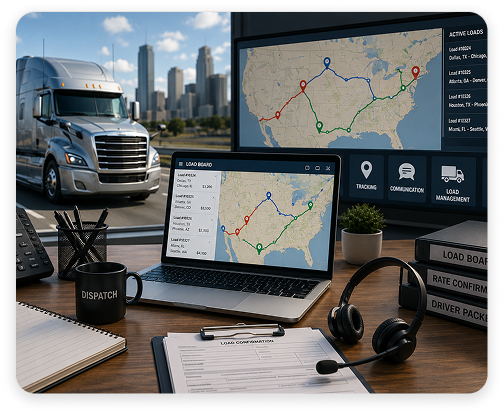


Keeping a truck running is not only about driving from one place to another. Trucking companies also have to find loads, talk to brokers, manage schedules, handle paperwork, and make sure drivers stay on track. Managing all of this every day can take a lot of time.
For people considering logistics as a career, this work can be an interesting entry point. It combines communication, freight management, negotiation, and quick decision-making.
A truck dispatch course in Lahore gives beginners a way to understand these responsibilities before stepping into a professional dispatch environment.
Imagine a truck has just delivered its previous load. The next question is simple: What should this truck carry now?
The dispatcher checks available freight and starts comparing options. Where is the truck? Where is the load going? When is pickup? What equipment does it require? Does the rate make sense? Can the driver reach the destination on time?
Only after looking at those details does a load become worth considering. Current Lahore job listings for US truck dispatchers mention many of these same responsibilities, including finding loads, negotiating with brokers, planning routes, tracking shipments, and maintaining dispatch records.
That gives a better idea of what dispatching actually looks like than the job title alone.
Before negotiating anything, you need to know what you are dealing with. A dispatcher may work with different types of equipment, including dry vans, reefers, flatbeds, or other truck types. Each has different requirements and may be suitable for different kinds of freight.
Lanes, deadhead, detention, layover, rate confirmation, BOL, POD, and other terms gradually become part of the daily vocabulary. A good training program gives beginners time to become comfortable with this language. Otherwise, even a basic conversation with a broker can feel confusing.
Finding a Load Is Only Half the Job
Load boards can make freight searching much easier, but they do not make the decision for you. A dispatcher still has to compare the available options.
For example, a load may offer a decent rate but require a long empty drive before pickup. Another may pay slightly less but put the truck in a better location for its next trip.
That is where experience starts to matter. The aim is not to collect as many loads as possible. It is to understand which load fits the truck, schedule, route, and carrier.
Training in load-board platforms and load selection can therefore be one of the most useful parts of learning dispatching.
Lahore-based training programs like at IPS Uni commonly include load booking, negotiation, route planning, and practical dispatch exercises.
The dispatcher may need to confirm the shipment details, ask questions about the pickup, discuss the rate, and negotiate when there is room to do so. A short conversation can involve several pieces of information, so hesitation or poor communication can make the process harder.
This is also why spoken English matters for people working with US-based operations
Recent Lahore job listings commonly ask for strong spoken and written English, broker negotiation skills, and the ability to communicate with drivers and clients.
A truck dispatch course in Lahore that allows learners to practise these conversations can be much more useful than one based entirely on slides.
What Exactly Do You Learn in a Truck Dispatch Course?
The exact syllabus of a truck dispatch course in Lahore depends on the institute, but a practical course can introduce learners to areas such as:
Some training programs also use live practice or simulated situations to help students become familiar with the workflow.
There is no standard duration for every truck dispatch course in Lahore. Different institutes use different schedules. Some courses are completed within several weeks, while others run for a few months.
Rather than choosing a course because it is shorter, look at what happens during those weeks.
Those answers tell you more about the training than the number of weeks printed on the course advertisement.
It can prepare you for the skills employers look for, but completing a course is not the same as having professional experience.
Current Lahore vacancies show that employers may ask for previous dispatch experience, familiarity with load boards, knowledge of US trucking, strong communication, negotiation ability, and the ability to manage several responsibilities at once. That is useful information for a beginner.
It means your learning should not stop at getting a certificate. The more comfortable you become with the actual workflow, the easier it is to demonstrate what you can do when applying for a position.
Some opportunities are onsite, while others may involve remote or international operations. Work schedules can also follow US time zones, so learners should understand that before choosing this career path.
Before paying for any course, spend a few minutes looking at the syllabus.
A useful checklist is simple:
Will you learn how freight is searched and evaluated?
Will you practice real communication rather than only read scripts?
Does the training explain how rates are discussed?
Will you learn what happens after a load is booked?
Will you understand common dispatch paperwork?
Are there exercises, simulations, or live practice?
Does the course cover the basics of US trucking and its terminology?
These details can help you separate a course that teaches dispatching from one that simply talks about dispatching.
Nobody becomes comfortable with dispatching after learning a few trucking terms. It takes practice. The first few broker calls may feel unfamiliar.
Reading a load board may take time. Route planning can become easier only after working through different examples. That is normal.
The useful thing about structured training is that you can make those mistakes while learning rather than waiting until your first real shift to discover what you do not know.
IPS UNI’s Truck Dispatch & Logistics Course provides a structured option for learners interested in entering this area. You can explore the course information directly on the IPS UNI Truck Dispatch & Logistics Course page.
You can also follow IPS UNI on its social media platforms, including Facebook and Instagram, for course updates and related learning opportunities.
You can learn load booking, load boards, broker communication, negotiation, routing, documentation and shipment tracking.
Yes. You can apply for dispatcher roles, although many employers also look for practical experience.
It depends on the institute and its syllabus. Courses can range from several weeks to a few months.
It can provide local training for people interested in US trucking, freight management and logistics-related careers.