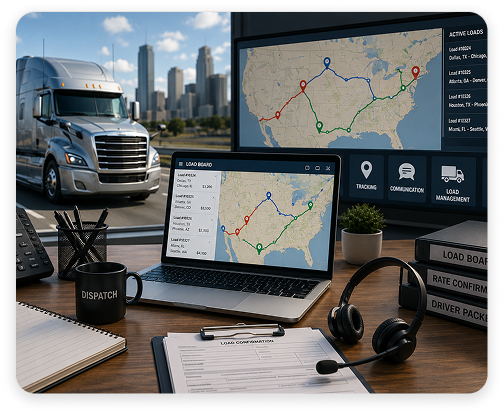

Just before sunrise, a driver sits stranded on a quiet highway, GPS frozen, deadlines approaching.
Miles away, his dispatcher quickly steps in, rerouting him, calming the broker, and keeping the load on track.
This behind-the-scenes hero isn’t just managing calls.
They’re keeping global logistics alive.
Truck dispatching may look small from the outside, but it’s one of the fastest and easiest ways to step into the international logistics world, where every decision keeps goods, businesses, and entire supply chains moving.
Imagine a truck driver stuck in traffic or facing a sudden delivery change. Who steps in to solve the problem and keep things moving smoothly? That’s the truck dispatcher.
At its core, dispatching is coordinating freight between shippers and carriers, but it’s much more than logistics, it’s real-time problem-solving, negotiation, and communication. Dispatchers plan routes, track shipments, negotiate rates, and support drivers so goods reach their destination on time.
Think of dispatchers as the nerve center of trucking operations. Without them, trucks sit idle, deliveries are late, and businesses lose money. It’s a role that combines strategy, people skills, and quick decision-making, making it an essential gateway into the global logistics industry.
No dispatchers. No deliveries. Total chaos. Picture trucks parked with nowhere to go, shipments piling up, and businesses scrambling to keep up. Drivers are left unsupported, and the entire logistics chain grinds to a halt. That’s why truck dispatchers are the unsung heroes keeping the world moving.
The demand is skyrocketing for several reasons:
Dispatchers are not just coordinators, they’re problem-solvers, communicators, and lifelines for drivers. They keep goods moving, support teams under pressure, and ensure businesses meet deadlines.
Here’s the human side: drivers often describe a great dispatcher as a “lifeline on the road.” They’re the ones who calm panic during delays, handle unexpected hurdles, and make long trips manageable. That’s why this role isn’t just in demand, it’s respected and valued.
Stepping into dispatching means stepping into a role where your work directly impacts people’s lives and businesses worldwide. It’s challenging, yes, but the sense of purpose and opportunity is unmatched.
Think of becoming a truck dispatcher like stepping into the captain’s seat of a ship, you’re not driving the truck, but you’re steering the journey. Every decision you make affects drivers, shipments, and businesses.
Here’s how you can get started:
Success as a dispatcher isn’t just about systems and schedules—it’s about empathy, quick thinking, and staying calm under pressure. Our specialized truck dispatching course trains you to handle real-world challenges with patience and professionalism, helping you build strong relationships with drivers and earn long-term trust.
Join IPS Uni’s Dispatcher Training Program and learn the skills that turn coordination into connection—and challenges into opportunities.
Being a truck dispatcher is like being the conductor of a busy orchestra, everything depends on your timing, decisions, and coordination. It’s rewarding, but it comes with challenges.
But every challenge has a silver lining.
Here’s the human side: a great dispatcher is like a trusted teammate to drivers. When a truck breaks down at midnight or a shipment is at risk, it’s the dispatcher’s calm, quick thinking that keeps everyone safe and on schedule. That sense of purpose and impact makes the challenges worthwhile.
In short, truck dispatching is demanding—but it’s also one of the most rewarding roles in logistics, where every day brings a mix of problem-solving, connection, and achievement.
Success in truck dispatching isn’t just about routes or software—it’s about people, organization, and quick thinking.
Key tips:
Human touch: A good dispatcher makes life easier for drivers and clients alike. Your support and problem-solving create trust, respect, and lasting success in the industry.
The world of logistics is evolving fast, and truck dispatching is no exception. Imagine a future where AI helps plan routes, apps track every shipment in real-time, and dispatchers focus on problem-solving and human connection rather than manual tasks.
Demand for skilled dispatchers will keep growing as e-commerce, international trade, and driver shortages continue to expand. Those who adapt to technology, build strong relationships, and solve problems efficiently will thrive.
Here’s the human side: while tech can streamline operations, the empathy, decision-making, and trust-building skills of a dispatcher cannot be replaced. Drivers still need someone to guide them, support them during emergencies, and navigate the unpredictable challenges of the road.
In short, the future of truck dispatching is a mix of technology and human skill. Embracing both opens doors to exciting opportunities, higher earnings, and a meaningful role in the global supply chain.
Truck dispatching isn’t just a job, it’s a journey. At IPS Uni, our experienced and trained dispatchers are the unsung heroes of logistics, coordinating drivers, solving problems, and keeping shipments moving across cities and countries.
The role comes with challenges, unexpected delays and high responsibility, but the rewards are real: making an impact, building relationships, and shaping the flow of goods worldwide.